Christmas Fireplace SVG: A Designer's Review for Holiday Stitching
As a designer who spends more time at the hoop than away from it, I approach every new machine embroidery design with a mix of excitement and skepticism. We've all seen files that look stunning on a screen but turn into a tangled mess of thread breaks and puckering once they hit the fabric. So, when I pulled up the Christmas Fireplace SVG, my first instinct wasn't to click "buy" immediately, but to analyze its potential for real-world application. This isn't just about whether it looks cute; it's about whether it can hold up as a handmade product that you'd be proud to sell in your small shop product lineup or gift to a loved one.
The initial visual impression of this file is undeniably cozy. It captures that specific, warm nostalgia associated with the holidays without feeling cluttered. The layout suggests a balanced composition, which is critical when you are translating a digital concept into physical stitches. For those of us creating holiday embroidery for clients, the mood a design sets is half the battle. This piece screams "home for the holidays," making it an ideal candidate for items meant to evoke comfort, like kitchen linens, throw pillows, or even a specialized sweatshirt embroidery project for a family matching set.
Visualizing the Finished Product in Real Scenarios
Let's move beyond the screen and imagine this design in action. I recently had a client request a custom tote bag design for a local boutique's Christmas market pop-up. They wanted something that felt artisanal but not overly childish. The Christmas Fireplace SVG fits this brief perfectly. When I mentally map this onto a canvas tote, the structural lines of the fireplace translate well into fill stitch and satin stitch combinations. The geometric nature of a fireplace means fewer tiny, fragile details that might get lost on textured fabric, which is a huge plus for durability.
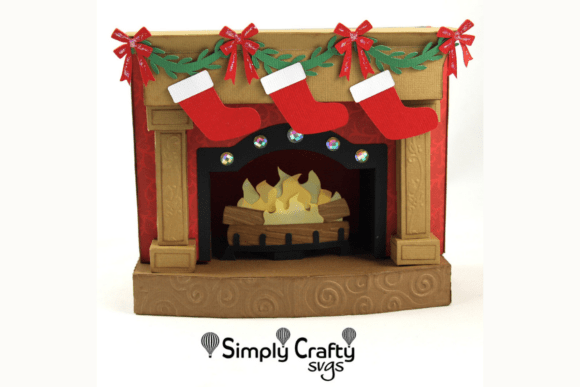
However, we need to address the elephant in the room regarding the source material. The product description highlights this as a "3D Christmas Fireplace SVG File" intended for papercraft and luminary use. As an embroidery professional, this triggers a specific set of considerations. A file optimized for cutting cardstock to create a 3D box behaves differently than a file optimized for flat stitching. If you are using this as a digital embroidery file, you must verify if the layers are separated correctly for stitching or if it is a single flat silhouette. If it is a flat silhouette derived from the 3D concept, it likely offers a bold, graphic look that works exceptionally well for custom apparel like hoodies or heavy cotton tees.
Consider a personalized gift scenario: a baby's holiday outfit. Parents love thematic elements, but safety and comfort are paramount. If the design includes intricate small details meant for paper folding, these might become dense stitch areas on a soft onesie. In this case, I would recommend scaling the design down and ensuring the stitch density is adjusted so the fabric remains breathable. For a baby embroidery project, simplicity often wins, and the strong outlines of a fireplace motif usually allow for a clean reduction in size without losing recognition.
Navigating Fabric Choices and Technical Challenges
One of the most critical aspects of reviewing any embroidery file is understanding where it might fail. While the Christmas Fireplace SVG has a charming aesthetic, its application requires careful thought regarding fabric texture and garment type. If you plan to stitch this on a stretchy knit, such as a jersey t-shirt, the straight lines of the fireplace structure could cause distortion if the stabilizer isn't robust enough. I always advise using a cut-away stabilizer for designs with significant horizontal or vertical spans to prevent the image from warping after the first wash.
Curved surfaces present another challenge. If you are attempting to place this on a cap or a structured hat, the flat geometry of the fireplace might fight against the curve of the crown. In my experience, designs with strong architectural lines look best on flat planes like the front of a sweatshirt, the center of a pillow cover, or an apron bib. Trying to force a rigid, box-like design onto a curved surface can result in gaps in the stitching or a distorted perspective that ruins the finished product's professional look.
Color selection is also vital. The original concept implies warm glows and perhaps brick reds or deep greens. However, when working with thread colors, contrast is king. On a dark navy sweatshirt, you'll need to ensure the "flame" or interior details have enough brightness to pop. Conversely, on a white tea towel, you might need to add a backing layer or use darker outlines to define the shape clearly. Always test your thread color choices on a scrap piece of the actual fabric you intend to use. What looks vibrant on your monitor might appear muddy once stitched.
Commercial Viability and Brand Consistency
For the Etsy seller or the owner of a craft business, the value of a design extends beyond its beauty; it lies in its reliability and licensing. Before listing this as a commercial embroidery asset or using it in products for sale, you must confirm the license terms. Since the source describes a papercraft origin, ensure that the rights extend to physical goods created via embroidery. Nothing damages customer trust faster than legal ambiguities.
Assuming the licensing is clear, this design has high potential for brand consistency. Its classic theme means it won't look dated next year, allowing you to build a recurring holiday collection. Whether you are creating an embroidered patch to sell as an add-on or stitching it directly onto inventory, the recognizable silhouette aids in immediate visual recognition. In a crowded marketplace, a clean, well-executed motif helps your printable mockup images stand out and convinces buyers of the quality of your design assets.
Final Verdict and Practical Recommendations
In conclusion, the Christmas Fireplace SVG offers a delightful foundation for holiday projects, provided the user approaches it with a designer's eye for adaptation. It is not a "load and go" solution if the original intent was purely 3D paper construction; it requires translation into the language of thread and fabric. My advice is to start with a test run on scrap fabric. Check the underlay, inspect the corners for tight turns that might cause bird nests, and evaluate how the light interacts with the stitch types used.
If you are looking to create a wedding gift for a couple spending their first Christmas together, or a festive uniform for cafe staff, this design holds promise. Just remember to respect the limitations of the medium. Don't expect paper-craft intricacies to survive the rigors of a washing machine without modification. By adjusting the hoop size appropriately, selecting the right stabilizer, and choosing high-quality threads, you can transform this digital file into a tangible piece of holiday warmth. It is a reminder that in our trade, the magic isn't just in the download; it's in the thoughtful execution that turns a simple file into a cherished heirloom.