Review: Thank You Teacher Lightbox SVG Template for Crafters
As a designer who spends more time staring at stitch simulations than I do sleeping, I approach every new digital embroidery file with a healthy dose of skepticism. We have all been there: you buy a design based on a glossy thumbnail, only to find the stitch density is a mess or the details vanish once the needle hits the fabric. So, when I recently evaluated the Thank You Teacher Lightbox SVG Template, my goal wasn't just to admire the artwork; it was to determine if this asset could survive the rigors of a real-world embroidery project. While this product is technically categorized under Shadow Boxes and marketed as a 3D SVG for paper cutting, my interest lay in translating its layered depth into thread.
First Impressions: Depth and Sentiment
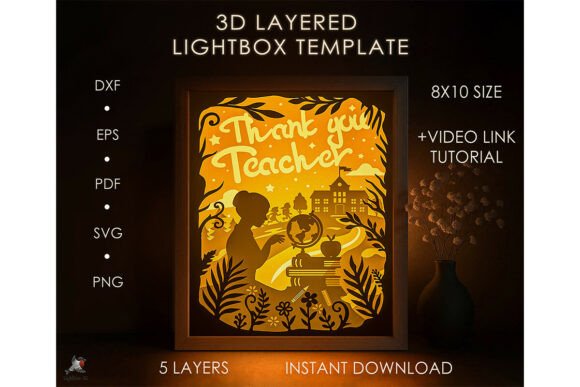
The first thing that strikes you about the Thank You Teacher Lightbox SVG Template is its mood. It carries a warmth that is essential for educational themes without slipping into cliché cartoonishness. The layout relies heavily on layering, which is brilliant for paper lightboxes but presents a unique challenge for machine embroidery. In a physical lightbox, shadows create the 3D effect. In embroidery, we must simulate that depth through stitch density, underlay, and strategic color placement.
The visual personality of this design feels sophisticated yet approachable. It avoids the overly busy backgrounds that often plague teacher-themed designs, leaving enough negative space to let the central message breathe. For an experienced digitizer or a savvy craft business owner, this clean structure suggests high adaptability. It doesn't scream for attention; instead, it invites a closer look, which is exactly what you want in a personalized gift meant to be cherished.
Real-World Application: From Screen to Stitch
To truly test the viability of this template, I envisioned a specific scenario: a boutique order for a local elementary school's end-of-year appreciation week. The client wanted custom sweatshirt embroidery for five faculty members. Usually, I would reach for a standard font-based design, but the layered aesthetic of the Thank You Teacher Lightbox SVG Template offered a chance to create something resembling a wearable patch.
In this context, the design shines as a focal point on a left-chest logo or a full-back statement piece. If adapted correctly, the "layers" of the SVG can be interpreted as distinct color blocks in your machine embroidery design. Imagine using a satin stitch for the bold outlines and a textured fill stitch for the background elements to mimic the cut-paper look. On a heavy cotton blend sweatshirt, this approach adds a tactile quality that elevates the finished product from a simple uniform to a keepsake.
Beyond apparel, this design has immense potential for home decor items that teachers actually use. A sturdy canvas tote bag design featuring this motif would be incredibly popular. The structural integrity of a tote bag can support the heavier stitch count required to replicate the shadow-box effect. Similarly, applying this to a linen tea towel or a decorative pillow cover for a classroom reading nook could create a cohesive brand identity for a teacher's workspace. The key here is recognizing that while the source file is a 3D SVG intended for paper, the composition translates beautifully to flat surfaces when treated with careful digitizing adjustments.
Navigating Technical Challenges
However, we must be realistic about where this design requires caution. Translating a lightbox template to embroidery is not a one-click process. The intricate layers that look stunning in a digital preview can become a nightmare if stitched onto the wrong material. For instance, attempting this on a stretchy jersey knit or a thin performance fabric without proper stabilization is a recipe for puckering. The stitch density required to achieve the "shadow" look might overwhelm delicate fibers.
If you plan to use this on curved surfaces like caps, you need to be extremely mindful of the design's width and the complexity of its corners. Small, detailed corners in a multi-layer design often suffer from registration issues on a cap frame. Furthermore, if the original SVG includes tiny lettering to mimic the lightbox text, you must verify if those details are large enough to be rendered in thread. Tiny text often fills in and becomes illegible, destroying the professional look of your handmade product.
Dark fabrics present another hurdle. The lightbox concept relies on light passing through layers; on black fabric, you lose that translucency unless you use metallic threads or high-contrast color palettes. Always test your thread colors against the fabric background. A design that pops on white might disappear on navy blue if the contrast isn't adjusted.
Enhancing Brand Value and Customer Trust
Why go through the trouble of adapting a Shadow Boxes template for embroidery? Because uniqueness drives value. In a saturated market of Etsy seller shops and craft fair booths, offering a design that looks like a custom-illustrated patch rather than a stock clipart dump sets you apart. When a customer sees the depth and thoughtfulness in a design derived from the Thank You Teacher Lightbox SVG Template, it signals professionalism.
This attention to detail builds customer trust. It tells them that you aren't just slapping a logo on a shirt; you are curating a small shop product with artistic merit. For commercial embroidery projects, this distinction can justify a higher price point. It transforms a commodity into a boutique item. Moreover, for those selling design assets or printable mockups, showing this design applied to various textures demonstrates versatility, helping buyers visualize the potential of their own projects.
Practical Notes for the Smart Designer
Before you commit to stitching this on a client's garment, here is my advice for working with this specific type of template:
- Test on Scrap First: Never skip the stitch-out. Use the same fabric and stabilizer combination you intend to use for the final item to check for registration errors.
- Check Licensing: Since this is sold as a template for lightboxes, verify the license terms regarding commercial embroidery use. Some creators allow personal use only, while others permit unlimited sales of finished physical goods.
- Adjust Density: If you are digitizing this yourself from the SVG, reduce fill densities in overlapping areas to prevent the fabric from becoming stiff or the needle from breaking.
- Simplify Details: Be prepared to merge small layers. What works as a separate paper cutout might need to be combined into a single color block for embroidery efficiency.
- Stabilizer Matters: For a design mimicking a 3D structure, a cut-away stabilizer is often safer than tear-away, especially on garments that will be washed frequently.
- Mockup Verification: Create black-and-white mockups to ensure the design holds its shape and readability without relying on color cues.
Ultimately, the Thank You Teacher Lightbox SVG Template is a versatile creative springboard. While it originates in the world of paper crafts, its strong compositional bones make it an excellent candidate for adaptation into high-quality embroidery. With the right technical adjustments and a keen eye for fabric compatibility, it can become a standout element in your craft business portfolio, delivering emotional resonance and visual appeal in equal measure.